
|
|
Welcome
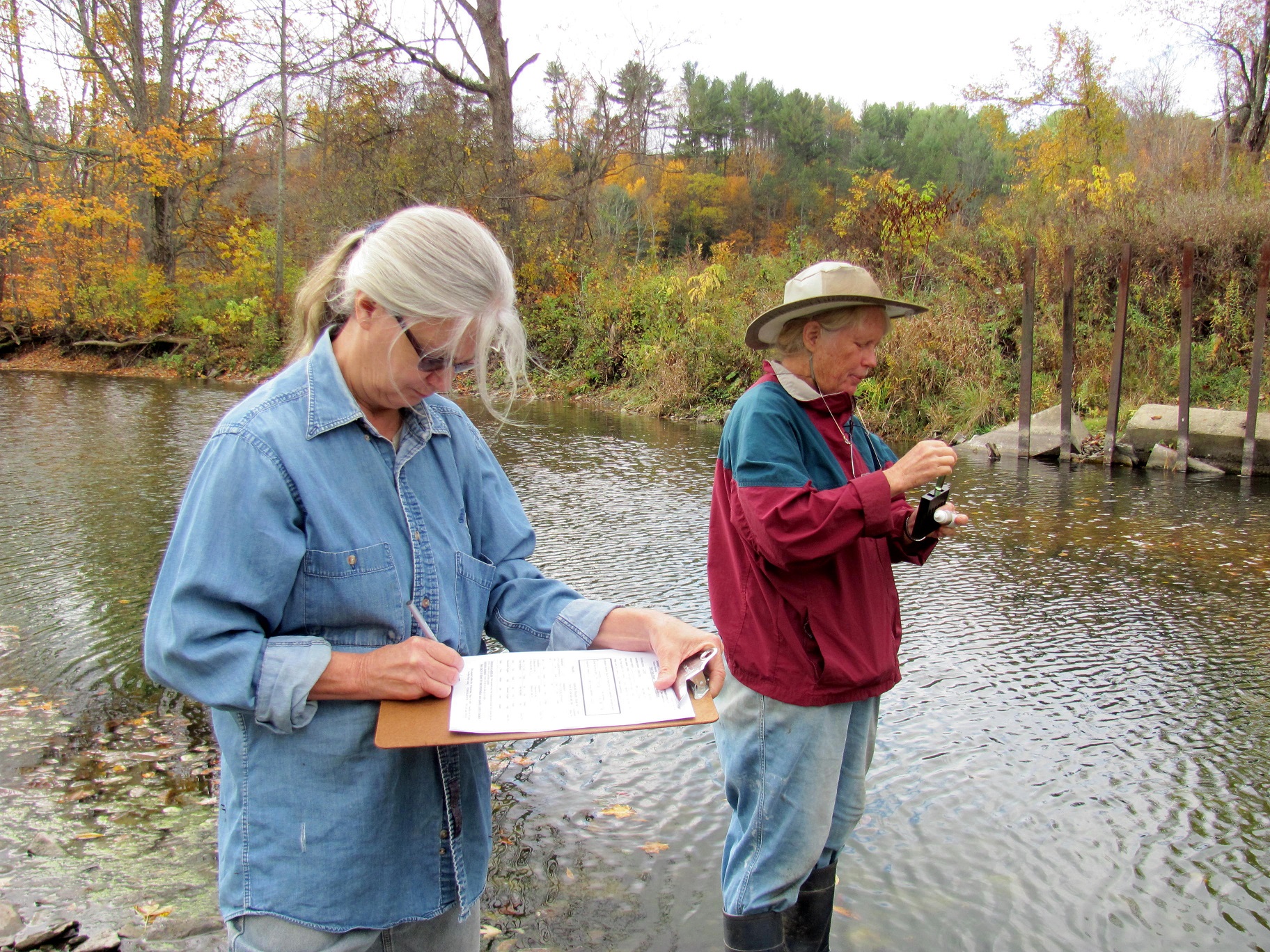
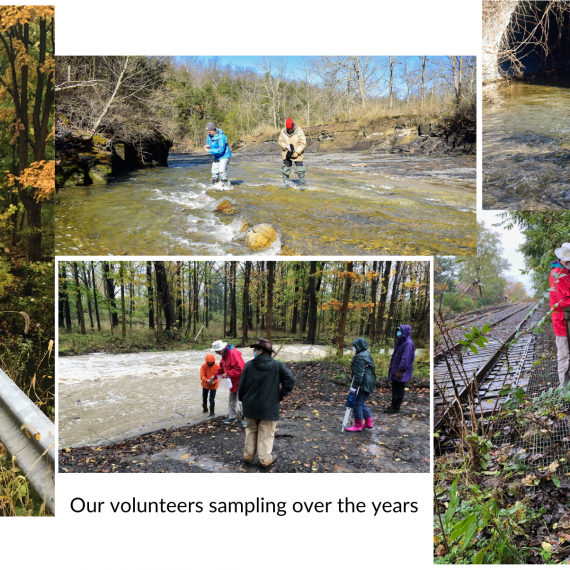
The nonprofit Community Science Institute (CSI) organizes and empowers citizen volunteers to monitor water quality in streams, lakes, ponds and groundwater as a critical first step in protecting water resources. "Volunteer monitoring" and "management-quality data" are generally viewed as mutually exclusive concepts. Not at CSI. Our long-term strategy for stream and lake protection combines the action of dedicated volunteers with the scientific expertise of a state-certified testing laboratory. This strategy has resulted in baseline data sets on water quality in six streams that feed Cayuga Lake – currently the largest data set on tributary streams of any of the Finger Lakes. We are supported financially by municipalities, local foundations, and the Finger Lakes – Lake Ontario Watershed Protection Alliance (FL-LOWPA), as well as fees for our certified testing services. Our 2006 budget was $72,000 including one full-time and five part-time staff positions. We are actively engaged in fundraising, and we welcome your contributions as well as your testing business. CSI is a 501(c)3 tax-exempt organization. Contributions are fully tax-deductible to the extent allowed by law.
Community Science and Local Policy Decisions
Following are examples of local policy decisions that may be facilitated by community science investigations of water quality, with specific reference to the Cayuga Lake watershed:
| Policy Issue |
Water Quality Data from
Community Science Monitoring Program |
| Improve management, upgrade, or replace sewage treatment plant (STP) |
Levels of fecal coliform and E. coli bacteria, phosphorus, nitrogen, toxic chemicals in STP effluent |
| Build new sewage treatment plant in Lansing or connect to Cayuga Heights plant |
Levels of E. coli and fecal coliform bacteria in lake water near lake-front homes with on-site septic systems |
| Safety of swimming in streams and lake |
Levels of E. coli or fecal coliform |
| Promote tourism |
Provide "report card" on water quality in the Cayuga Lake watershed and make it available on the internet |
| Meet state mandates for regulating
stormwater impacts, including public outreach and education
|
Engage volunteers in monitoring activities;
use data from volunteer monitoring partnerships to demonstrate compliance with mandates
|
| Upgrade City of Ithaca water treatment plant on Six Mile Creek or switch to Bolton Point water supply on Cayuga Lake |
Pattern of sediment, bacteria and nutrients along Six Mile Creek; water quality relative to other streams and Cayuga Lake; identify and manage source(s) of elevated chlorination by-products |
| Dredge Cayuga Inlet and Cayuga Lake; projected cost |
Estimate annual loading of sediment by combining water quality data with USGS flow data |
| Imposition of Total Maximum Daily Load (TMDL) requirements for phosphorus and sediment loading to southern end of Cayuga Lake |
Annual empirical estimates of phosphorus and sediment loading provide basis for negotiating TMDLs and allocating TMDL burden among municipalities |
Why Volunteer Water Quality Monitoring Partnerships?
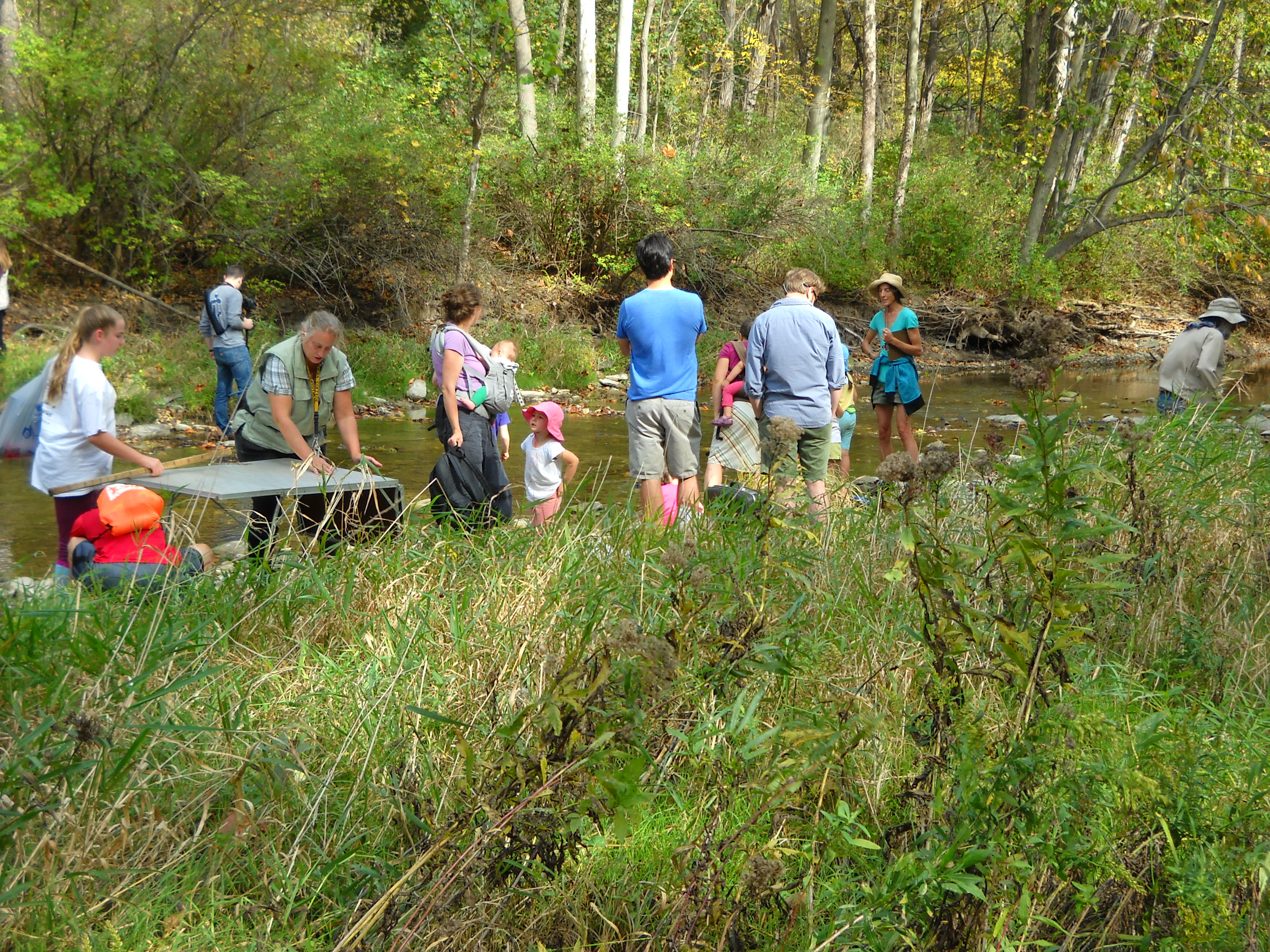
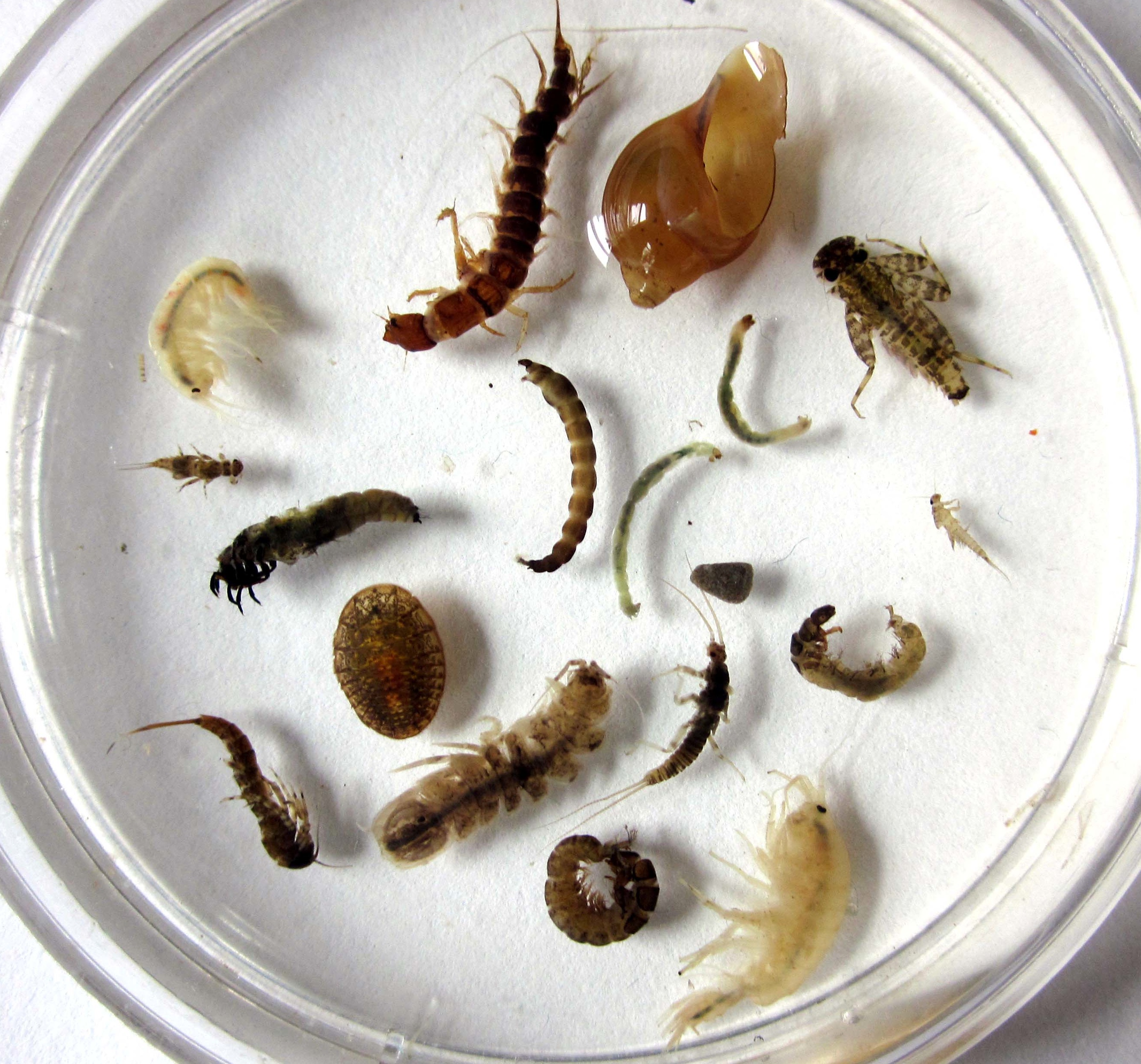
The short answer is that in most places, government simply lacks the resources to provide adequate surveillance of streams and lakes. "Adequate" means that there is enough water quality data to devise and implement management strategies that will be effective in protecting streams and lakes over the long term, i.e., decades into the future. Government generally has neither the personnel nor the money to produce the broad base of data that is needed to identify and document water quality problems arising from specific land use practices in local contexts. Volunteer monitoring partnerships can play a critical role in filling data gaps, bringing local problems to light, and providing citizens and their government with the up-to-date knowledge needed to make informed decisions about how best to manage water resources. Volunteer monitoring can take a variety of forms ranging from visual surveys of streams, to benthic macroinvertebrate sampling and analysis, to chemical and microbiological tests of water samples using portable test kits or in partnership with a professional laboratory such as CSI’s. Volunteer data are generally welcomed by government agencies as long as the methods are comparable to other sources and the quality of the data is assured.
Is Community Science the Same as Citizen Science?
Not quite. Citizen science is growing in popularity among researchers as a way to enlarge the scope of scientific inquiry by engaging volunteers to help collect data. Citizen science projects tend to be regional, national or international in scope. They may involve observational monitoring, the testing of scientific hypotheses, or a combination of the two. Audiences for citizen science projects are generally other research scientists and government agencies at the state, national and international level.
Community science differs from citizen science in some respects. Community science projects focus on local issues and local government. They prioritize observational monitoring and the use of data for science-based management of local resources over hypothesis testing and publication in scientific journals. Community science adheres to the scientific method, and projects may contribute to new scientific knowledge. However, creating new knowledge is secondary to gathering data within a known scientific framework and using results to manage local resources sustainably.
Mission Statement
The mission of the Community Science Institute (CSI) is to foster and support environmental monitoring by volunteers in order to educate the public about natural resources and to collect scientifically credible data for use in protecting the environment and managing natural resources sustainably.
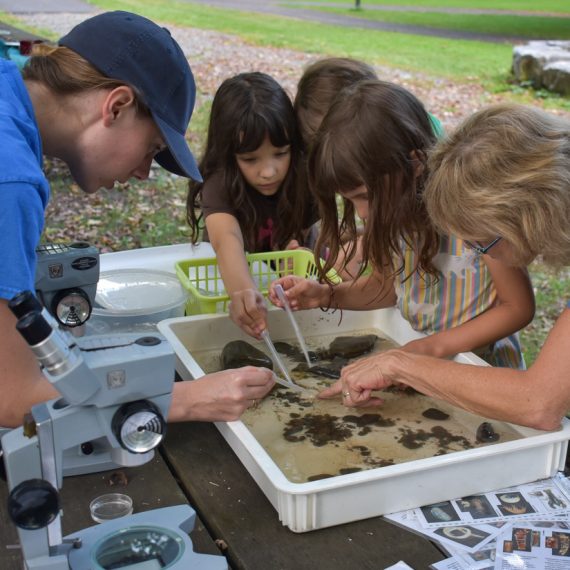
To fulfill our mission with respect to water resources in our region, we broker partnerships between volunteer groups and local government agencies to monitor streams and lakes in the Cayuga Lake watershed and beyond. We recruit and train volunteers, coordinate their monitoring activities, and assure that data produced with volunteer support meet the standards of good science as well as the data quality objectives of local stakeholders. We operate a certified water quality testing laboratory (ELAP #11790) where water samples collected by volunteers are analyzed for bacteria, nutrients, solids and minerals. We archive raw data in MS Excel spreadsheets and make the files publicly available on our website. We offer analyses and interpretations of the water quality of lakes and their feeder streams in the form of narrative summaries based on graphs and tables of key chemical, physical and microbiological parameters. Graphs, tables and summaries of results are posted on our website and updated regularly in order to provide timely information for local decision-making on a range of environmental policy issues.
|